Walk into a commercial laundry that's dealing with chronic downtime, and you can feel it before anyone says a word. There's a certain chaos in the air. Equipment is down, staff is scrambling, and nothing looks like it's under control. That chaos isn't random. It's a symptom of a plant that doesn't have time to do production, let alone clean up after itself.
Maintenance is definitely on most plant managers' minds. According to a 2022 American Laundry News survey, more than 71 percent indicated they paid more attention to maintenance than in the past.
However, 65 percent indicated they have a schedule for maintenance, with 32.4 percent saying they do not have a maintenance schedule. 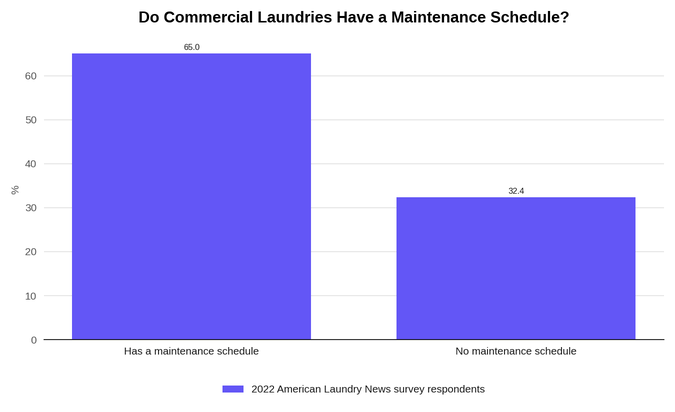
In other words, that's nearly one-third of respondents without a maintenance schedule of any kind.
Look closer and you'll usually find the same root cause: the plant is stuck in a loop. Something breaks, a technician rushes to fix it, production comes back online, and everyone breathes a sigh of relief. It feels like a win. But it's a win built entirely on reaction, not prevention, and the cycle starts again the moment the next part fails.
Why is Preventive Maintenance Important for Commercial Laundries?
Part of why the commercial laundry repair loop is so hard to break comes down to something surprisingly human: short-term consequences being more visible than long-term ones.
Stephen Schock, Spindle director of maintenance strategy and programs, notes that nobody applauds a maintenance technician for completing a preventive maintenance task. There's no "great job on that PM" moment the way there is when someone heroically gets a jammed tunnel washer running again in the middle of a shift, says Schock, who has more than three decades of expertise in engineering, maintenance, and reliability management.
Repairs feel urgent and visible. Prevention is quiet and easy to postpone.
So plants keep rewarding the behavior that keeps the fire-fighting cycle alive, even when everyone knows it's not sustainable.
Breaking the Pattern of Reactive Maintenance in Commercial Laundries
Breaking that pattern starts with something that's simple to say but might be difficult thing to do.
"You have to get them comfortable being uncomfortable," Schock says. "To me, all of that begins with planning."
That means prioritizing the unglamorous work of planning maintenance before something breaks, even when it's tempting to let it slide for one more production run. And in practice, that discipline comes down to something surprisingly simple: a standing weekly meeting between maintenance and production to walk through what maintenance is planned and what production needs.
That single habit changes more than the maintenance schedule. Once a plant commits to that regular planning rhythm, equipment reliability tends to climb on its own, without anyone having to chase it directly. Preventive maintenance stops being the task that gets bumped for the next fire drill and starts being the reason there are fewer fires to put out in the first place.
Managing Preventive Maintenance Load
Of course, planning is only half the equation. It's one thing to decide preventive maintenance deserves a seat at the table; it's another to actually stay on top of it once dozens of assets, work orders, and technicians are involved. That's usually where the "run to failure" habit creeps back in, not because anyone stopped caring, but because the schedule lives in someone's head, a spreadsheet, or a stack of paper that's easy to lose track of during a busy shift.
CMMS Tools for Better Maintenance
This is exactly the gap a purpose-built CMMS is designed to close.
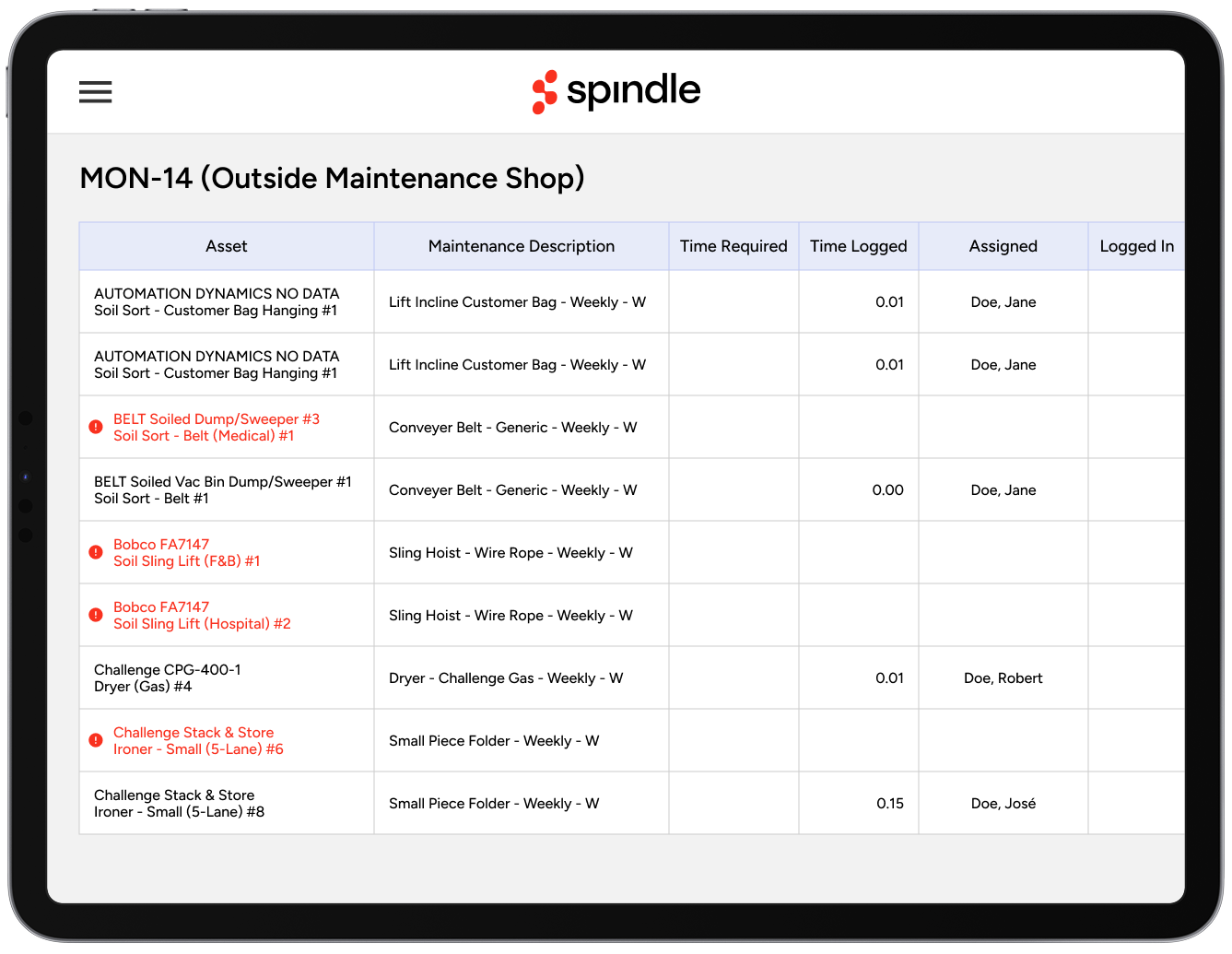
Instead of relying on memory or manual tracking, plants can keep everything in one place, including:
-
Preventive maintenance schedule,
-
Work orders
-
Piece of equipment history
Just as important, it gives all of that information visibility to both maintenance and production. After all, data that's not visible or easily accessible to the team members that need it might as well not exist when it comes to implementation.
When PM tasks are as easy to see and act on as an emergency repair, prevention finally gets the same attention reactive fixes have always gotten. You can't fix something you don't know is broken.
Make Your Preventive Maintenance Plan Work for You
No two laundries are the same. A preventive maintenance plan that might work for your plant might not work for another.
The 2022 American Laundry News survey feedback revealed a variety of reasons for why maintenance can be challenging in some locations.
Per the respondents, factors hurting maintenance programs included lack of reliable technicians, higher costs of parts, lack of accessibility to needed parts, and even lack of knowledge about the importance of maintenance among new hires.
These issues can be exacerbated by geographic location, i.e., a less populous area with a smaller available pool of qualified technicians.
Bottom line, however, preventive maintenance isn't a binary proposal. Preventive maintenance programs can fall on a continuum of rigor, ranging from basically non-existent to consistently robust.
If you're on the first part of that continuum, your goal should be "how can I take a step toward the other end of the continuum?" Don't treat it as something that has to be "fixed" by tomorrow. Often times, applying that mindset to those types of big-picture problems simply results in no change being made and, as a result, no improvement in the status quo.
'How Do I Start Improving Maintenance Planning in my Laundry?'
If you take anything away from this, it's this: stronger preventive maintenance isn't necessarily about capital expenditures or adding team members. A commitment to better preventive maintenance starts with a mindset shift.
Are you in a plant struggling to break the repair cycle? Start treating planning as a habit. (For more on this, you can read about the psychological process behind developing good habits ... in this case, a habit of better maintenance planning in your commercial laundry plant.)
Back it up with real visibility into what's scheduled and what's overdue, and give preventive maintenance the credit it rarely gets but always earns.
Learn more about how Spindle CMMS can help your plant get better visibility into the work that needs doing.